- Most roof problems start small, and a slipped tile or cracked flashing caught early is usually a simple repair.
- The loft is the best place to spot trouble: look for daylight, damp felt, water stains on timbers and mould.
- Blocked or sagging gutters can cause damp in walls even when the roof itself is sound.
- Flat roofs show problems as bubbles, splits, standing water and a soft feel to the ceiling underneath.
- Do not climb onto your roof: check from the ground with binoculars and let a roofer do the work at height.
Signs inside the house
A roof rarely fails all at once. A storm lifts a tile or ridge mortar cracks after years of frost, and water travels along felt and timbers before it shows as a stain, often some distance from the actual gap. Catching it early usually means a smaller job and less risk of rot. A check in spring and after autumn storms is a good habit.
Start indoors, because some of the clearest signs are on ceilings and walls rather than on the roof. Look at top-floor rooms, around chimney breasts and in corners where walls meet the ceiling. Note when a stain appears, for example only in heavy rain or when wind blows from one direction, as this helps a roofer trace the cause.
- Brown or yellow water stains on top-floor ceilings
- Peeling paint or bubbling plaster near the ceiling line
- Damp or mould around a chimney breast
- A musty smell in upstairs rooms or the loft
- Drips or a damp patch that grows after rain
What to check in the loft
If you can get into your loft safely, take a torch on a dry day and again during or just after heavy rain. Walk only on boards or joists, never on the plasterboard between them. Turn off the torch for a moment and look for chinks of daylight, which show gaps in the roof covering.
Look at the underside of the roof. Many older roofs have felt under the tiles, while some very old ones have none. Damp patches, sagging or torn felt, dark tide marks on rafters and wet insulation all point to water getting in. Soft, crumbly or very dark timber can be a sign of rot and is worth showing a roofer.
Condensation can look like a leak. If the underside of the roof is damp everywhere, rather than in one spot, poor ventilation may be the cause. A roofer can tell the difference and may suggest vents rather than a repair.
Signs on the outside of the roof
Stand back on the pavement or in the garden, or look from an upstairs window across the street if you can, and use binoculars or the zoom on your phone camera. Take photos as you go. They help a roofer understand the problem before they visit and give you a record to compare later.
- Slipped, cracked or missing tiles or slates, often showing as a gap or a lighter patch
- Cracked or missing mortar along the ridge tiles at the top
- Lifted or cracked lead flashing where the roof meets a chimney or wall
- A leaning chimney, crumbling chimney mortar or a damaged chimney pot
- A dip or sag in the roof line, which can mean a structural problem
- Thick moss holding water against tiles
- Pieces of tile, slate or mortar in the gutter or on the ground
Gutters and downpipes
Gutters are part of the roof's job of moving water away from the house. When they block with leaves or moss, water spills over the edge and runs down the wall. Over time this can cause damp patches inside, green staining on brickwork and damage to the fascia boards behind the gutter.
Watch your gutters during heavy rain. Water pouring over the edge, dripping from joints, or a downpipe that does not flow at all are the main signs. Sagging sections, gutters pulling away from the fascia and plants growing in them also need attention. Clearing and realigning gutters is often a quick job, and it is worth doing before winter.
Signs a flat roof needs repair
Flat roofs on extensions, garages and dormers wear differently from pitched roofs. Felt, rubber membranes and fibreglass all age with sun and frost, and because water drains slowly, small faults let in water quickly.
From an upstairs window, look for pools of water that remain a day or two after rain, blisters or bubbles in the surface, cracks and splits, and edges or joints that have lifted. Inside, a ceiling below a flat roof that looks stained or feels soft is a warning sign. A flat roof that keeps leaking in different places may need re-covering rather than another patch.
Stay safe: do not go on the roof
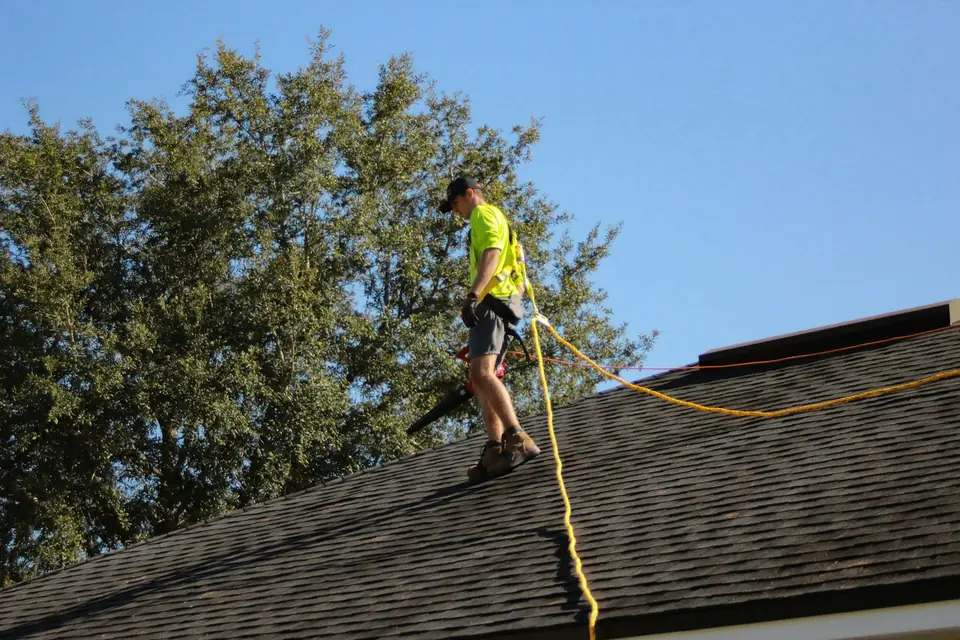
Roofs are one of the most dangerous places to work. Tiles are often slippery, gutters will not take your weight, and some materials, such as old cement sheets and many rooflights, will not support a person at all. The HSE advises always assuming a roof is fragile unless you can confirm otherwise. Do not climb onto your roof to inspect or fix it yourself.
Some older garage and outbuilding roofs are made of asbestos cement sheets. The HSE says asbestos can be present in any building built or refurbished before 2000. Do not walk on, drill, cut or break these sheets, as they can be fragile and can release fibres. Mention it to the roofer so they can say whether they can work with it or whether a specialist is needed.
If there is an active leak, you can limit damage from inside. Put a bucket under drips, move belongings away and, if water is near light fittings or electrics, keep clear and switch off that circuit at the consumer unit only if it is safe to reach.
When to call a roofer
Call a roofer if you find any active leak, missing or slipped tiles, damaged flashing, chimney problems or a sagging roof line. A good roofer will explain what they found, show you photos, and tell you whether it is a patch repair or something bigger. Ask how they will reach the roof safely, as access equipment such as a tower or scaffolding can be needed.
Small repairs do not usually need permission. Re-covering a large part of a roof, changing the roof material or altering its shape can need building regulations approval, and listed buildings or homes in conservation areas have extra rules. In England, the Planning Portal explains when re-roofing needs approval, and your council's building control team can confirm.
How AYS can help
On AYS you can describe what you have seen, add photos taken from the ground or the loft, and get free quotes from local roofers who cover your postcode. Every roofer passes a photo ID check and a review by our team, and roofers can show insurance and qualifications on their profile.
Questions people also ask
Can a roof leak without any missing tiles?
Yes. Water can get in through cracked flashing around a chimney, worn ridge mortar, a split in the felt underneath, a blocked valley or a failed seal around a roof window. Overflowing gutters can also push water into walls and look like a roof leak. A roofer will check the loft and the roof covering together to find the real source.
Is a damp patch on the ceiling always the roof?
Not always. On a top-floor ceiling the roof is a common cause, but damp can also come from a leaking pipe or water tank in the loft, a bathroom above, or condensation. A patch that appears or grows only after rain points towards the roof or gutters. A patch that stays the same in dry weather may be plumbing.
Should I repair or replace my roof?
Most roofs can be repaired. A few slipped tiles, cracked ridge mortar or damaged flashing are usually fixed in a visit. Replacement becomes more likely when many tiles are failing at once, the battens or timbers have rotted, or a flat roof keeps leaking in several places. Ask your roofer to show photos of what they found before you decide.
Is it a problem if moss grows on my roof?
A thin layer of moss is common and not always harmful. Thick moss holds water against tiles, can lift them in frost and often washes into gutters and blocks them. If moss is heavy, mention it to a roofer. Avoid pressure washing a roof yourself, as it can damage tiles and means working at height.
- Planning Portal: Building regulations, re-roofing
- HSE: Why asbestos is dangerous and where it can be found
- HSE: Falls through fragile roofs
Rules can change. Check the official pages above for the latest position.